
Rooted in Early History
The area now known as the City of Lone Tree has a rich and layered history. Long before modern development, indigenous tribes including the Arapaho, Cheyenne, Ute, and Shoshone lived nomadic lifestyles across the vast prairies and grasslands of the region.
Later, Austrian immigrants John, Joseph, and Jacob Schweiger became some of the first European settlers. Their 38-acre ranch, which still exists today and known as Schweiger Ranch, remains a historic gem and a reminder of Lone Tree’s agricultural beginnings.
From Nine Homes to a Growing Neighborhood
The modern Lone Tree story began in the early 1980s with the opening of a new subdivision on Memorial Day weekend in 1982. At the time, the neighborhood consisted of just nine households.
Originally organized as the Lone Tree Homeowners Association (later known as the Charter HOA), residents quickly discovered the challenges of living in unincorporated Douglas County without mandatory HOA enforcement or local governance.
Concerns grew over:
- Recreational vehicles parked in private yards
- Unapproved exterior home modifications
- Lack of promised parks and trails
- Limited enforcement of neighborhood standards
Residents wanted more than houses – they wanted a community.
Finding Their Voice
As the area expanded, so did the desire for local control.
By 1991, Lone Tree had grown to include 13 homeowners’ associations yet still lacked localized governance. Without authority over zoning, planning, and community services, residents felt vulnerable to the effects of rapid regional growth.
The Charter HOA and community leaders lobbied Douglas County to address maintenance and development concerns. Over time, one idea became clear:
If we want to shape our future, we must lead it.
The movement toward incorporation gained momentum as residents sought self-governance, accountability, and a distinct civic identity.
Becoming a City
In November 1995, Lone Tree residents voted decisively to incorporate — a defining moment that would shape everything to come.
676
In Favor
165
Opposed
The City officially began its journey in 1995, and the first City Council meeting was held in June 1996. At the time, Lone Tree was home to approximately 3,000 residents.
The founders envisioned something ambitious — a first-class residential and business community defined by:
- High design standards
- Thoughtful planning
- Brick fencing and curated landscaping
- A welcoming atmosphere for residents and businesses
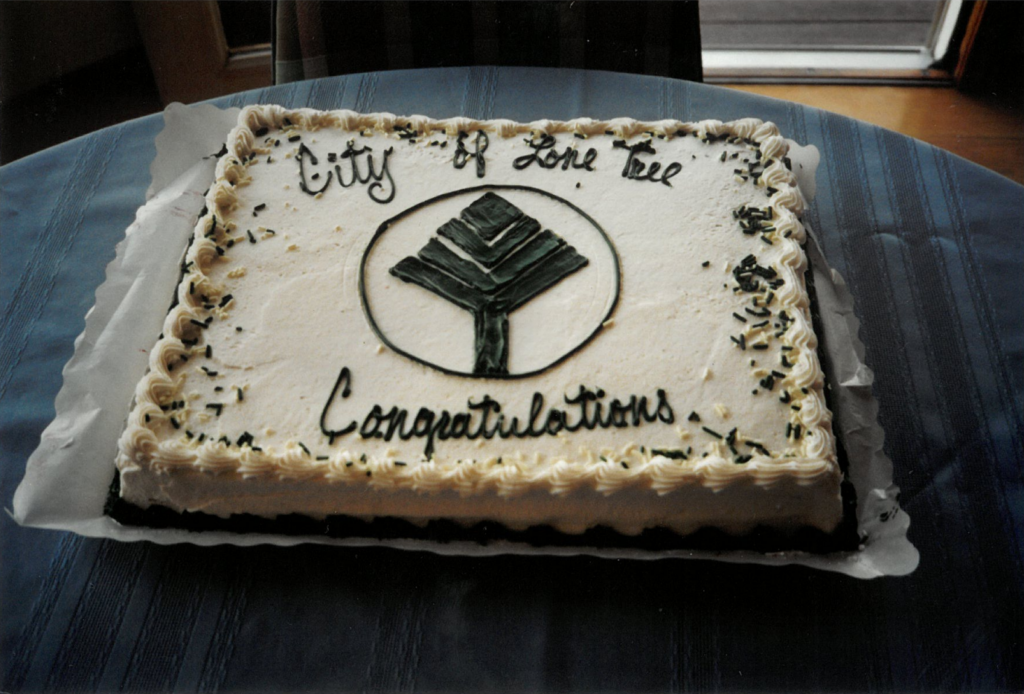
They weren’t just forming a City — they were defining its character.
A National Model for Growth
~15,000
Residents
~30,000
Daytime Population
9 sq mi
City Area
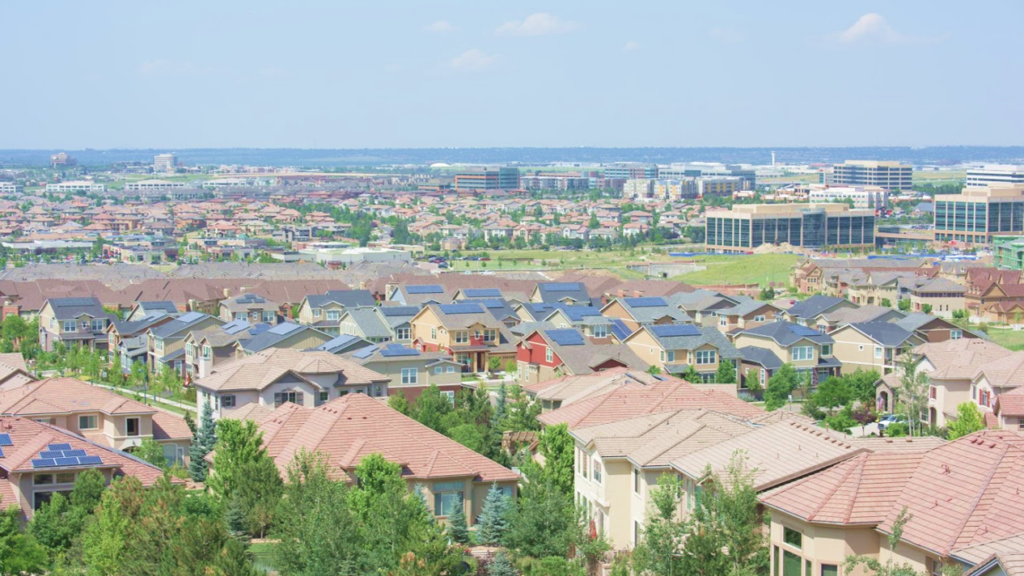
Today, Lone Tree is home to approximately 15,000 residents, a daytime population of nearly 30,000, and spans almost nine square miles.
The City has become a recognized model for intentional growth and citizen-driven leadership. The values established in the early days remain the foundation of Lone Tree today:
- Public safety
- Thoughtful development
- Active resident and business involvement
- Strong design standards
- Community collaboration
From nine households to a thriving city, Lone Tree’s story is one of grassroots leadership and shared vision.
As Lone Tree continues to grow, its path forward remains guided by the same principle that shaped its beginning: when residents care deeply about their community, they will continue to build something exceptional.
Major Milestones of Lone Tree
1982 — First homeowners move into the new Lone Tree development.
1985 — Lone Tree Golf Club, centerpiece of the residential development, opens.
1991 — South Suburban Parks and Recreation District buys the Lone Tree Golf Club and Hotel.
1995 — City of Lone Tree incorporates.
1996 — First Mayor Jack O’Boyle sworn in. Lone Tree City Council holds its first meeting.
1998 — Lone Tree becomes a Colorado home rule city. Lone Tree Library opens.
2000 — Lone Tree voters approve annexation of the 3,500-acre RidgeGate property.
2001 — Heritage Hills, Centennial Ridge, and Carriage Club annexed to the City.
2003 — Sky Ridge Medical Center opens.
2004 — Lone Tree Recreation Center opens. Civic Center opens. City establishes its own Police Department. Schweiger Ranch designated as a Douglas County historic landmark.
2006 — County Line & Lincoln Light Rail Station opened.
2007 — Park Meadows mall annexed into Lone Tree.
2008 — Second Mayor Jim Gunning sworn in. Voters approve Recreation & Arts Center Bond.
2009 — Cook Creek Pool opens.
2010 — Tennis Center and Park opens at Lone Tree Golf Club.
2011 — Lone Tree Arts Center opens.
2014 — RTD approves Southeast Rail Extension. Lone Tree Link begins operations as a fixed-route circulator shuttle.
2016 — Third Mayor Jacqueline Millet sworn in. Charles Schwab campus opens. Construction begins on the 2.3-mile light rail extension. Lone Tree Library relocates.
2017 — City purchases the former Douglas County Library, converted to The Hub.
2019 — Light Rail extension opens for service.
2020 — Link Circulator transitions to Link on Demand service.
2021 — Voters pass Ballot Question 2E, a 1% sales tax increase to fund vital City services.
2023 — First residents move in east of I-25. City annexes Sweetwater Park.
2024 — Fourth Mayor Marissa Harmon sworn in.